The Journal · October 3, 2026
Down vs Synthetic Insulation: Which Is Warmer?
The Short Answer
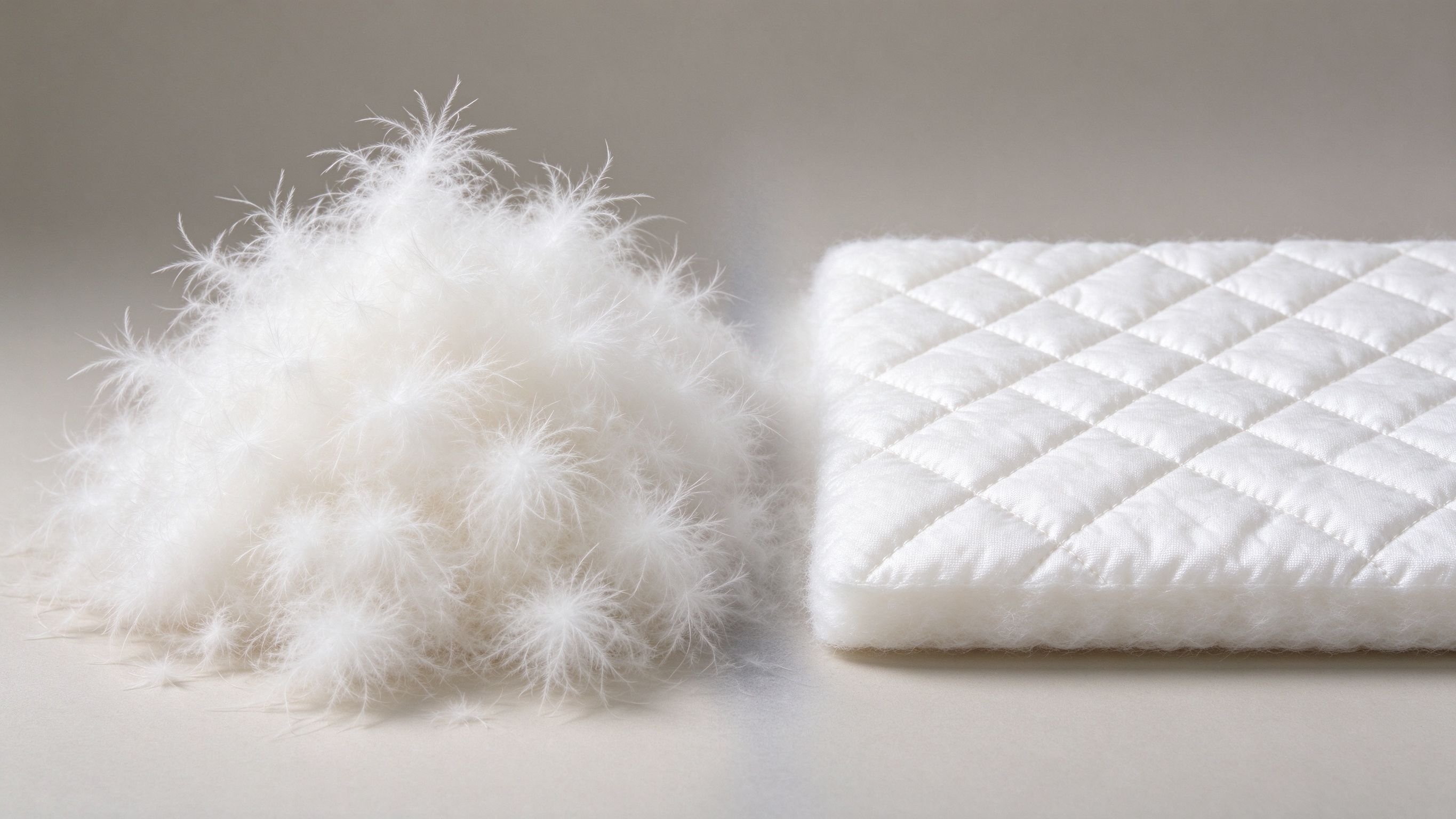
Premium goose down is significantly warmer per gram than any synthetic insulation, and it packs smaller and lasts longer. Synthetics win in one scenario only: when you expect the jacket to get soaked. For everyday winter wear, alpine commutes and sub-zero temperatures, 700+ fill power goose down is the superior choice.
This guide breaks down exactly how the two insulations compare, so you can choose with confidence.
What Is Down Insulation?
Down is the soft, fluffy undercoating beneath a bird's outer feathers. It works by trapping millions of tiny air pockets, and those pockets hold your body heat close to you.
The key metric is fill power, which measures how many cubic inches one ounce of down occupies.
- 500 - 600 FP: Standard grade, heavier and bulkier
- 700+ FP: Premium grade, maximum warmth with minimal weight
- 800+ FP: Ultra-premium, used in top expedition gear
A 700+ fill power down jacket traps dramatically more air than a 600 FP jacket of the same weight. That trapped air is the actual insulation.
What Is Synthetic Insulation?
Synthetic insulation is made from polyester or recycled plastic fibers that mimic the structure of down. Brands engineer these fibers into sheets or loose fills that also trap air.
Synthetic insulation has three genuine advantages:
- It stays warm when wet
- It dries quickly
- It is usually cheaper to produce
Warmth: Down Wins by a Wide Margin
For the same weight, premium goose down offers roughly 1.5 to 2 times the warmth of most synthetic insulation. A 700+ FP goose down jacket delivers extreme-cold performance in a lightweight, packable shell, while a synthetic jacket needs noticeably more bulk to reach the same warmth.
Wet Weather: The Synthetic Advantage
When down gets soaked, the clusters collapse and lose almost all insulating power. Synthetic fibers keep their structure even when wet.
That is why skiers and mountaineers who expect heavy, persistent moisture often choose synthetic — or a down jacket with a fully waterproof shell.
The practical answer for most people: pair premium goose down with a water-repellent, windproof outer shell. Your down stays dry, and you get all the warmth with none of the wet-weather compromise.
Durability and Lifespan
Quality goose down, if cared for properly, can maintain its loft for decades. Synthetic insulation, by contrast, tends to lose its resilience after a few seasons and can pack out permanently.
Down also compresses far better. A 700+ fill power jacket can pack down to a fraction of its size, which is why premium alpine gear is almost always down-filled.
Cost: You Pay for Performance
Synthetic jackets are cheaper to produce, and that shows at the register. But when you compare warmth-per-dollar over a five-year lifespan, premium down usually wins — a 700+ FP goose down jacket outlasts most synthetic jackets by a wide margin.
The Bottom Line
If you need one jacket for urban winters, mountain escapes and sub-zero commutes, choose premium goose down. Buy synthetic only if the jacket will regularly be soaked through, or if budget is the deciding factor.
At MYCOAT, every jacket is filled with 90/10 European white goose down at 700+ fill power, wrapped in a water-repellent, windproof shell. You get the warmth of heritage alpine brands at an honest price.
Shipping cost is not included — contact us for a quote.